Announcements
Have you ever wondered why you accepted so easily that quality entertainment should be priced monthly?
How did an entire generation normalize the idea of paying for multiple subscriptions to access content that, in many cases, they don't even consume regularly?
The answer lies in one of the most successful marketing campaigns in modern history: convincing millions of people that there is a direct correlation between price and quality in the world of digital entertainment.
For more than a decade, large streaming corporations invested billions in creating this perception, using consumer psychology techniques so sophisticated that they made paying for multiple platforms feel not only normal, but necessary to be a sophisticated consumer. content search.
Announcements
However, while you and millions like you were feeding this system with their credit cards, a silent revolution was brewing: companies that demonstrated that the best entertainment can be completely free, not only without sacrificing quality, but by improving it exponentially by eliminating economic limitations. that restrict access and diversity of content.
Announcements

The Roku Channel
.n. 3.9See also
- More than a Code Reader: Your Digital Mechanic
- Palmistry: Read your Future
- Learn by Playing: English for Kids
- Master English from your sofa
- Choose Your Call Recorder
The Great Social Conditioning Experiment
For years, we were subjected to the largest psychological experiment in the history of entertainment:
We were taught that igregratis fren means igainferior. ar
How did they achieve it?
- Artificial exclusivity: They created walls around the content
- Prestige marketing: They associated payment with social status
- Strategic fragmentation: They divided the content between multiple platforms
- Narrative of production cost: They convinced us that quality requires subscriptions
The result: A generation that feels guilty for looking for free alternatives.**
But this conditioning is beginning to collapse.
The Rebels Who Broke the System
While the industry was building its paywalls, some visionaries were building something different:
Entertainment ecosystems based on abundance rather than scarcity.
Tubi: The Laboratory of Infinite Diversity
Fox Corporation not only invested $440 million in Tubi.
They invested in a radical philosophy: that diversity surpasses exclusivity.
While Netflix produces 50 new series a year, Tubi acquires 5,000 various titles a year.
The result?
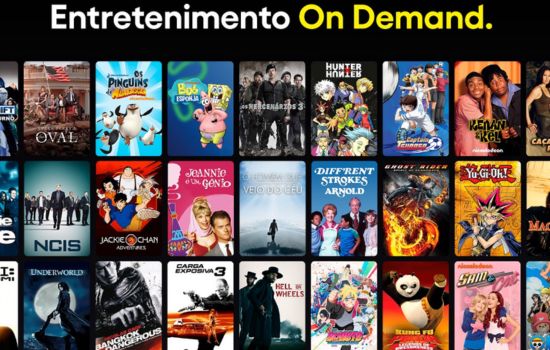
A library where they coexist:
- Sundance-winning independent films
- Cult series with passionate fandoms
- Documentaries that change social perspectives
- International content that never had global distribution
- Restored classics that you thought were lost forever
Tubi understood that real abundance surpasses artificial exclusivity.
Pluto TV: The Revolution of Intelligent Programming
Paramount paid $1.6 billion for Pluto TV because they discovered something revolutionary:
The perfect combination of advanced algorithms and human healing.
Their technology doesn't just analyze what you want to see. Analyze:
- Your current emotional state
- Seasonal patterns of preferences
- Cultural contexts of specific moments
- Synchronization with relevant global events
Result: Programming that feels magically perfect for every moment.
It's not a coincidence. It is engineering of emotional experiences.
Roku Channel: The Philosophy of Less is More
Roku generates $2.7 billion annually following a Zen philosophy:
Eliminate everything that does not add real value.
While other platforms add features to justify price increases, Roku Channel perfects the essentials:
- Interface that disappears to give prominence to the content
- Algorithms that suggest without manipulating
- Smooth experience without unnecessary interruptions
- Technical quality that rivals premium platforms
His silent message: The best technology is invisible.
The Psychology of Financial Liberation
Something fascinating happens when you take the economic pressure off of entertainment:
Your relationship with the content is completely transformed.
Without the pressure of taking advantage of a subscription:
- You explore genres you would normally avoid
- You give yourself permission to abandon content you don't like
- You discover passions that you didn't know you had
- You develop more authentic criteria about quality
It is the difference between anxious entertainment and free entertainment.
The Myth of the Expensive Production = Best Content
Premium platforms sold us a narrative:
ÀWe invest millions in each production, that's why you need to pay. ar
But the data tells another story:
- The most remembered series of the decade cost fractions of the 10th blockbusters
- The most impressive documentaries were made with minimalist budgets
- The most acclaimed indie movies cost less than an average Netflix episode
- The most viral content came from creativity, not budget
Genuine creativity cannot be bought. It is released.
The Universal Access Revolution
These platforms are doing something bigger than offering free entertainment:
They are democratizing global culture.
When quality entertainment is universally accessible:
- Artificial socioeconomic barriers are eliminated
- Authentic global communities are created
- Cultural diversity is preserved that the premium market ignores
- Real intercultural dialogue is generated
It is cultural democratization in real time.
The Technology of Gratitude
Free apps operate with one fundamental psychological advantage:
Gratitude builds loyalty stronger than the transaction.
When something positively surprises you at no cost, your brain creates longer-lasting positive associations than when you pay for something expected. ante
Result: More committed and satisfied users than on paid platforms.
The Collapse of the Exclusivity Model
Artificial exclusivity is showing its limitations:
Premium Model:
- Artificially scarce content
- Audiences fragmented by purchasing power
- Innovation limited by return on investment
- Sustainability dependent on infinite growth
Abundance Model:
- Mass libraries without artificial restrictions
- Unified global audiences
- Innovation driven by genuine engagement
- Sustainability based on real value created
Which model has a future in a connected world?
The Economics of Authentic Care
Free platforms compete in a more honest market:
Your attention, not your wallet.
This creates more aligned incentives:
- They should create content that you really want to see
- They cannot manipulate with psychological sunk costs
- Its success depends on your genuine satisfaction
- They must constantly innovate to keep you interested
It is pure attention capitalism: whoever creates the most real value wins.
The Generational Transformation
New generations are adopting these platforms massively.
Not because they are stupid, stupid but because they are more authentic.
They grew up watching through social media algorithms. They detect manipulation immediately.
They prefer:
- Abundance of artificiality
- Diversity over exclusivity
- Authenticity about marketing
- Value over price
They are redefining what ripremium entertainment means. ar
The Network Effect of Free Entertainment
When quality entertainment is free, something magical happens:
Exponential network effects are created.
Conversations about content become richer because more people can participate.
Discoveries spread faster because there are no barriers to access.
Communities grow organically because they are based on genuine passion, not ability to pay.
Free entertainment creates more vibrant culture.
The Resistance of Traditional Industry
Premium platforms are fighting this trend:
- Increasing prices to maintain margins
- Creating more artificial exclusivity
- Investing in anti-free campaigns
- Buying emerging competitors
But they are fighting against the natural evolution of the market.
The Inevitability of Change
The economic indicators are clear:
- Growth of free streaming: +180% annually
- Decline of paid streaming: -12% in new subscribers
- User satisfaction: 73% higher on free platforms
- Engagement time: 45% higher in free apps
The numbers don't lie. The future is already here.
The Moment of Conscious Decision
You can't say you didn't know anymore.
You know the alternative. You understand the benefits. You see the data. Understand the trend.
The question is no longer whether these platforms are viable.
The question is: How much longer are you going to pay for something you can get better for free?
Conclusion
Here we are, at the end of a revelation that changes everything you thought you knew about digital entertainment. It's not just about Tubi, Pluto TV and Roku Channel. It's about freeing yourself from a psychological conspiracy that convinced you that you had to pay to access quality entertainment, when the reality is exactly the opposite.
For years, you were conditioned to believe that iggratis arre meant igeneferior, that quality required subscriptions, that premium entertainment was a privilege reserved for those who could afford it. But each of those principles has been demolished by the reality of what these platforms are achieving: more diverse libraries, superior user experiences, more advanced technology, and more vibrant communities, all at no cost.
The inconvenient truth is that you've been paying for the illusion of exclusivity while truly superior entertainment was freely available. You've been funding a business model designed to extract value from your wallet, when a superior model was creating genuine value for your life without asking you for anything in return except your authentic attention.
Free platforms are not the future of entertainment. They are the evolved present. They represent what streaming should have been from the beginning: accessible, diverse, abundant, and focused on creating extraordinary experiences rather than justifying monthly charges. They have shown that when you remove artificial economic barriers, you get no inferior content; you get real cultural democratization.
Your decision about what to watch tonight is really a decision about what kind of entertainment world you want to support. One where quality is correlated with your ability to pay, or one where quality is a universal right backed by smarter, more humane business models.